
I. Maintenance System and Standardization
Rail transit maintenance strictly follows a graded and categorized approach, with tailored cycles and processes based on equipment characteristics and operational needs:
- Vehicle Systems
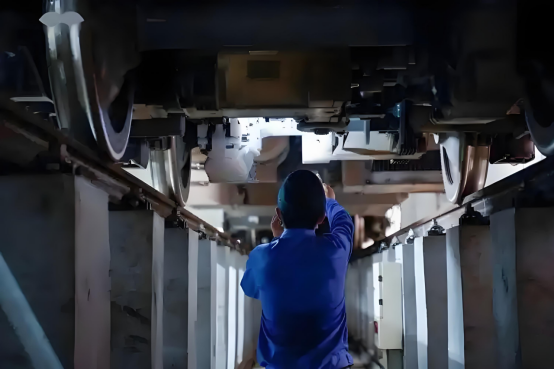
- Train Inspection: ≤15 days per check, focusing on safety-critical components like doors, brakes, and lighting.
- Overhaul: ≤5 years or 800,000 kilometers of train, involving disassembly and repair of core components such as bogies and traction motors.
- Major Repair: ≤10 years or 1.6 million train-kilometers, featuring comprehensive replacement of aged parts and technical upgrades.
- Lifespan Control: General service life of rolling stock is ≤30 years or 4.8 million train-kilometers.
- Signaling and Power Supply Systems
- Signaling System: Patrol inspection ≤7 days per check, with a total lifespan ≤20 years. Regular testing of degraded functions and redundant switching is required.
- Power Supply Equipment: Real-time monitoring of critical components like circuit breakers and transformers, with annual testing of single-sided power supply functions.
- Civil Engineering Facilities
- Tunnels and Bridges: Monthly tunnel inspection, and quarterly inspection of bridge concrete structures. The frequency of settlement monitoring decreases with the operational years.
II. Key Equipment Maintenance Technologies
- Vehicle Repair Technologies
- Fault Diagnosis: Vibration analysis, oil testing, and infrared thermography are used for wear monitoring of running gear.
- Specialized Maintenance:
- Brake Resistor Regular Repair: Inspect porcelain insulator cracks to prevent short circuits.
- Traction Motor Insulation Detection: Monthly insulation resistance testing with a megohmmeter.
- Track and Overhead Contact Line Maintenance
- Pantograph-Catenary Relationship Testing: Annual inspection of dynamic contact force and arcing rate of overhead contact lines to optimize current collection quality.
- Wheel-Rail Relationship Testing: Monitor wheel-rail wear and dynamic response to prevent derailment risks.
- Emergency Equipment Protection
Emergency operation devices (e.g., door unlocking buttons, platform emergency stop devices) must be tested every six months, with enhanced protection through video monitoring and warning labels.
III. Application of Intelligent Maintenance Technologies
The modern maintenance system is transitioning to predictive maintenance, leveraging digital technologies to boost efficiency:
- Internet of Things (IoT): Sensors deployed to monitor equipment status in real-time, enabling early fault warnings (e.g., bearing temperature rise alerts).
- Big Data Analytics: Historical fault data integrated to predict equipment degradation trends and optimize maintenance plans (e.g., signaling system fault rate models).
- Intelligent Decision Systems:
- Onboard diagnostic platforms automatically generate maintenance work orders, reducing fault handling time by 30%.
- AI algorithms analyze vibration spectra to accurately identify fault points in vehicle transmission systems.
IV. Maintenance Management Optimization Strategies
- System and Process Optimization
- Outsourcing Management: Clarify service providers’ safety responsibilities and establish evaluation indicators such as response speed and fault repair rate.
- Spare Parts Management: Differentiate between circulating parts and spare parts, and establish a tracking system to prevent inventory obsolescence.
- Safety and Quality Control
- Track Area Operations: Implement dual-person dual-post supervision, restore equipment status after construction, and conduct acceptance checks.
- Tool Calibration: Mandatory verification of instruments; prohibit use of non-compliant tools.
- Emergency Response
- Level 1 Incidents(e.g., overhead contact line rail breaks): Immediate suspension of operations for emergency repairs.
- Level 2 Incidents (e.g., signaling system degradation): Speed-restricted operations with repairs completed within 4 hours.
V. Future Trends: Integration of Green and Intelligent Technologies
Next-generation maintenance technologies will focus on:
- Digital Twins: Create virtual models of facilities to simulate and rehearse maintenance schemes.
- Low-Carbon Maintenance: Promote eco-friendly materials (e.g., biodegradable lubricants) and energy-saving processes.
- Automated Operations: Use robots for high-risk tasks such as rail flaw detection and overhead contact line cleaning.
VI. Conclusion
The rail transit maintenance system has evolved from a “repair-after-failure” model to a comprehensive approach combining “preventive maintenance and intelligent prediction.” In the future, further integration of smart sensing, data-driven strategies, and green technological upgrades will reduce lifecycle costs while ensuring safety. With the deepened implementation of the Urban Rail Transit Facility and Equipment Maintenance Management Measures, standardized maintenance processes and technological innovation will drive the industry toward higher goals of zero faults and zero delays.


