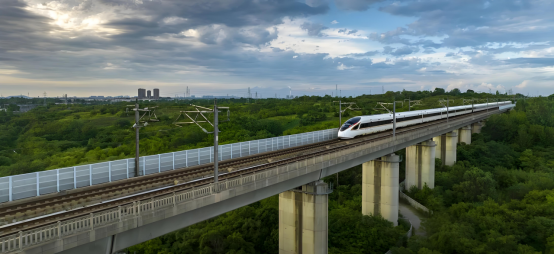
1. Body and Load-Bearing Structure System
The body serves as the foundation for transportation activities, with its design needing to balance strength, lightweight, and environmental adaptability.
- High-Speed Train Bodies: Utilize an integral load-bearing aluminum alloy frame (e.g., the extrusion welding technology in the CR400 series), featuring an aerodynamic shape to reduce high-speed drag and airtightness to withstand pressure fluctuations above 4,000 Pascals. The walls are filled with soundproofing materials, windows use multi-layer composite glass, and business class is equipped with adjustable airline-style seats and embedded entertainment systems.
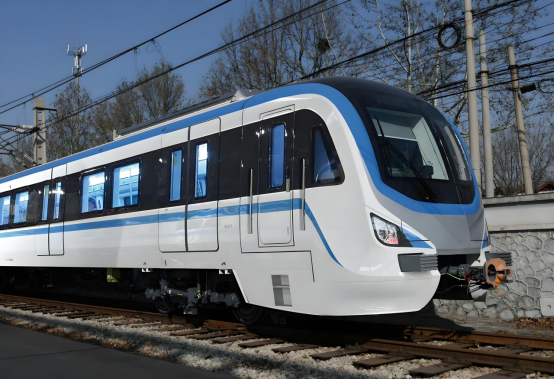
- Metro Bodies: Classified into Type A (3 meters wide) and Type B (2.8 meters wide) based on passenger capacity. The main structure uses stainless steel or lightweight alloys, designed to handle alternating stress from frequent starts and stops in tunnels. The floor has a high-density soundproof layer, and the side walls have enhanced fire-resistant coatings to meet strict urban rail fire safety standards.
- Traditional Train Bodies: Early designs used riveted steel and wood hybrid structures. Modern passenger cars (e.g., Type 25) have shifted to all-steel welding, while freight cars are designed differently based on cargo characteristics: open wagons without roofs for bulk cargo transport, and tankers using special steel with double-shelled bodies to prevent leakage.
2. Bogie: Core Technology of the Running Gear
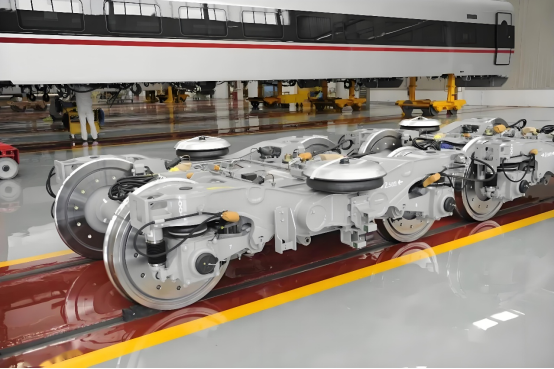
The bogie, the dynamic interface between the vehicle and the track, directly determines operational stability and curve negotiation capability.
- High-Speed Bogies: Primarily use a pillowless structure (e.g., the SWMB-400 type in CRH380), matching ballastless track systems (integral concrete track beds). They employ air spring suspension combined with anti-snake dampers, with axle loads controlled between 14-17 tons, maintaining lateral stability at speeds exceeding 400 km/h. Some models introduce active suspension technology, dynamically adjusting damping coefficients based on real-time track conditions.
- Metro Bogies: Feature a compact design with wheel diameters typically less than 840 millimeters and an overall height of 550-650 millimeters to fit platform gaps. Key innovations include the ability to navigate small radio (minimum curve radius of 100 meters) and noise reduction: the use of rubber elastic wheels, dampers, and soundproof covers reduces operational noise by 15-20 decibels. Some lines (e.g., Guangzhou Line 4) use linear motor drives, eliminating traditional drive shafts and achieving a climbing ability of 60 per mille.
- Traditional Train Bogies: Mainly use steel spring suspension structures with axle loads of 21-23 tons and a maximum speed of 160 km/h. Their advantages lie in simple structures and low maintenance costs, but they exhibit significantly higher wheel-rail wear during curve negotiation compared to high-speed trains.
3. Traction and Braking Systems
- The coordination of power and braking ensures operational efficiency and safety redundancy.
- High-Speed Trains: Draw power from the overhead catenary (AC25kV or DC1500V). They use a power-distributed mode with multiple high-power asynchronous motors configured per carriage. For example, the CR400AF model features a single-axis power rating of 635 kW.
- Metro Systems: Have two power supply methods: third rail (DC750V) and overhead catenary (DC1500V). The consist typically adopts a “powered to unpowered ratio” design, such as a 6-car consisting with 4 powered cars and 2 unpowered cars, to meet the acceleration demands of short station intervals.
Traditional Trains: Initially relied on internal combustion units. Modern mainline locomotives are gradually shifting to AC-DC-AC electric transmission. However, freight locomotives still retain the high-torque diesel engine direct-drive mode.
4. Power Supply and Auxiliary Energy Management
- The power supply network provides the core energy for vehicles, while auxiliary systems ensure passenger comfort.
- High-Voltage Power Supply Architecture: High-speed rail uses the AT (autotransformer) power supply system. Traction substations output 27.5kV single-phase electricity, achieving long-distance, low-loss power transmission through sectioned insulation. Metro systems centrally monitor the entire power supply network via SCADA systems, automatically switching to backup power during faults.
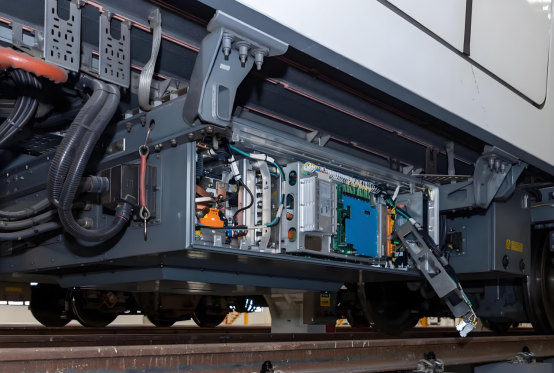
- Onboard Auxiliary Systems: Air conditioning, lighting, and door controls are powered by auxiliary inverters. The domestication rate of IGBT power modules in high-speed rail has reached 90%. New metro vehicles are equipped with energy storage devices, such as supercapacitors, to recover braking energy for use in starting and acceleration.
5. Signaling and Train Control Systems
- Intelligent control is key to increasing transport density.
- High-Speed Train Control Systems: Centered on CTCS-3, achieving autonomous train control and moving block operations with a minimum tracking interval of 3 minutes. The system integrates natural disaster warnings (for high winds, earthquakes), transmitting real-time environmental data via trackside sensors.
- Metro Signaling Systems: Generally, adopt CBTC (Communication-Based Train Control), supporting unmanned driving modes. Track foreign object intrusion monitoring devices use laser scanning and image recognition technologies to prevent safety risks.
- Traditional Railways: Still rely on track circuits and fixed block systems. The upgraded CTCS-2 system is used for speed-increased lines, but the degree of automation lags behind.
6. Technological Evolution Trends
- Future development focuses on the following dimensions:
- High-Speed Development: Research and development of maglev technology for high-speed rail at the 400 km/h level, using high-temperature superconducting levitation and linear motor drives to break through the wheel-rail friction limit.
- Intelligent Development: Metro systems are advancing the popularization of Fully Automatic Operation (FAO) systems, integrating facial recognition security checks, intelligent scheduling, and vehicle self-inspection functions.
- Green Development: Bogie lightweight materials are shifting from aluminum alloys to carbon fiber composites, and braking systems are improving renewable energy recovery rates to over 30%.
- Heavy-Haul Development: Freight train bogies are strengthening bearing and frame intensity, aiming to increase axle loads to 25 tons, supported by intelligent loading and unloading robot systems.